How Will Grocery vs. Experiential Retail Perform in 2026?

November 17, 2025

Share


-2.png)
Suppose you’re focused on strengthening portfolio performance in 2025. In that case, you can’t build your strategy on market narratives; you need retail assets with provable daily demand, consistent foot traffic and tenants who convert consumer behavior into durable income. Retail isn’t in recovery mode anymore; it’s reorganizing around the asset types that consistently demonstrate operational strength.
As you assess where to allocate capital, you’ll see how grocery-anchored retail continues to deliver through essential weekly purchasing patterns, while experiential retail is accelerating as fitness, dining and entertainment operators commit to new locations. That kind of expansion isn’t noise; it’s a clear signal of tenant confidence backed by real revenue and long-term demand.
When you understand how these categories perform across rent durability, occupancy stability, tenant credit and trade-area fundamentals, you move beyond surface-level comparisons. You’re evaluating structural advantages the way disciplined operators do through measurable performance indicators and cycle-tested income behavior. That’s where returns compound, and that’s the lens we’re about to apply.
What Defines Grocery-Anchored Retail?
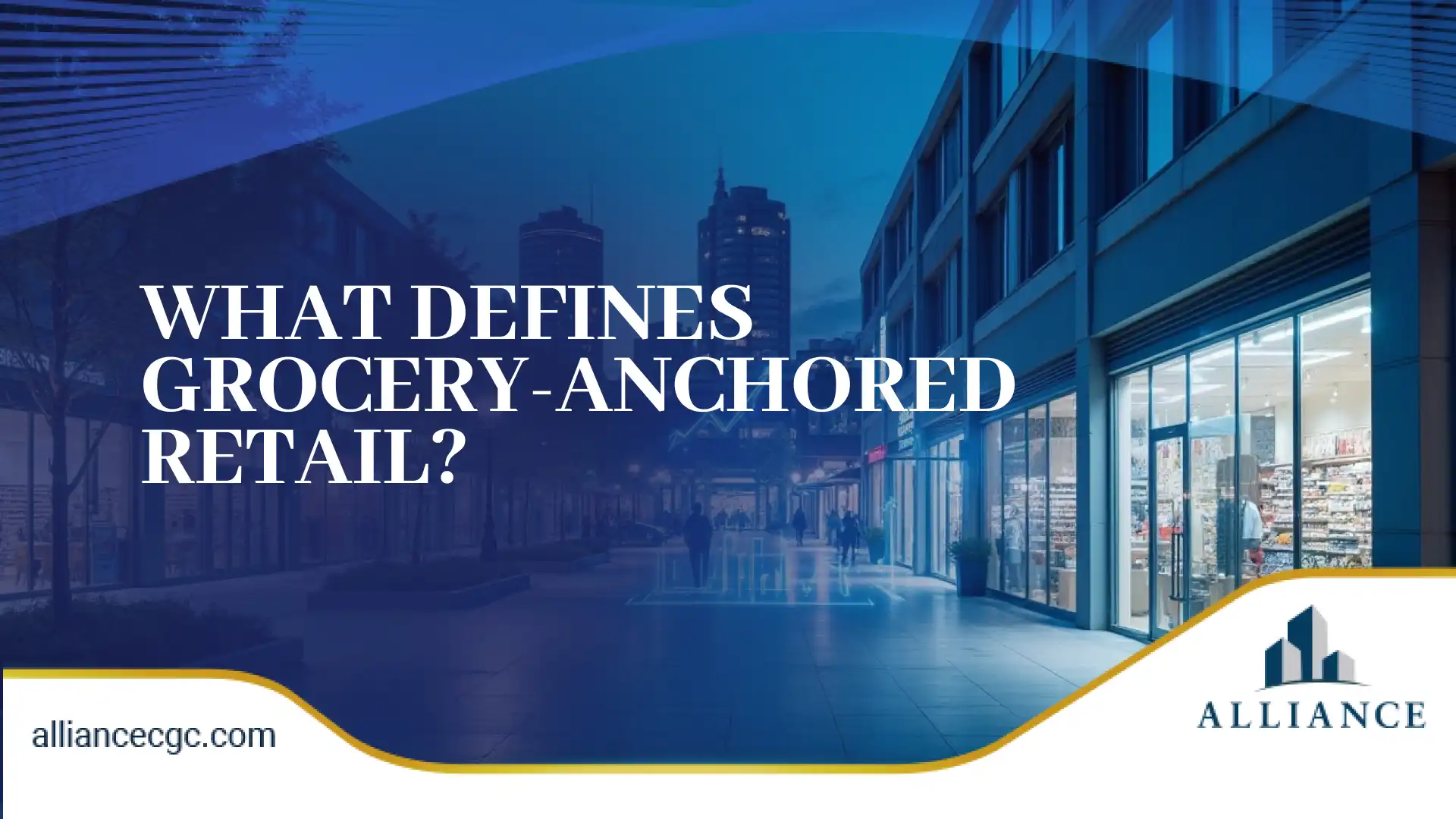
If you’re looking for retail income you can rely on in 2025, grocery-anchored centers give you one of the strongest foundations. These assets are built on essential, nondiscretionary consumer behavior, which means demand doesn’t soften when markets shift. Weekly grocery runs generate steady foot traffic, supporting inline tenants and stabilizing occupancy across economic cycles.
Consumers visit grocery stores one to two times a week, and that repetition creates predictable traffic patterns. A strong supermarket anchor also reduces vacancy risk, tightens co-tenancy and improves leasing velocity factors that directly strengthen risk-adjusted returns. That’s why industry data consistently shows grocery-anchored centers outperforming most retail formats in both occupancy and renewal longevity.
When your anchor is tied to essential-use demand, you’re not speculating on consumer interest; you’re capturing behavior that happens regardless of economic conditions. In a year where investors need structural stability, that advantage matters.
What Defines Experiential Retail?
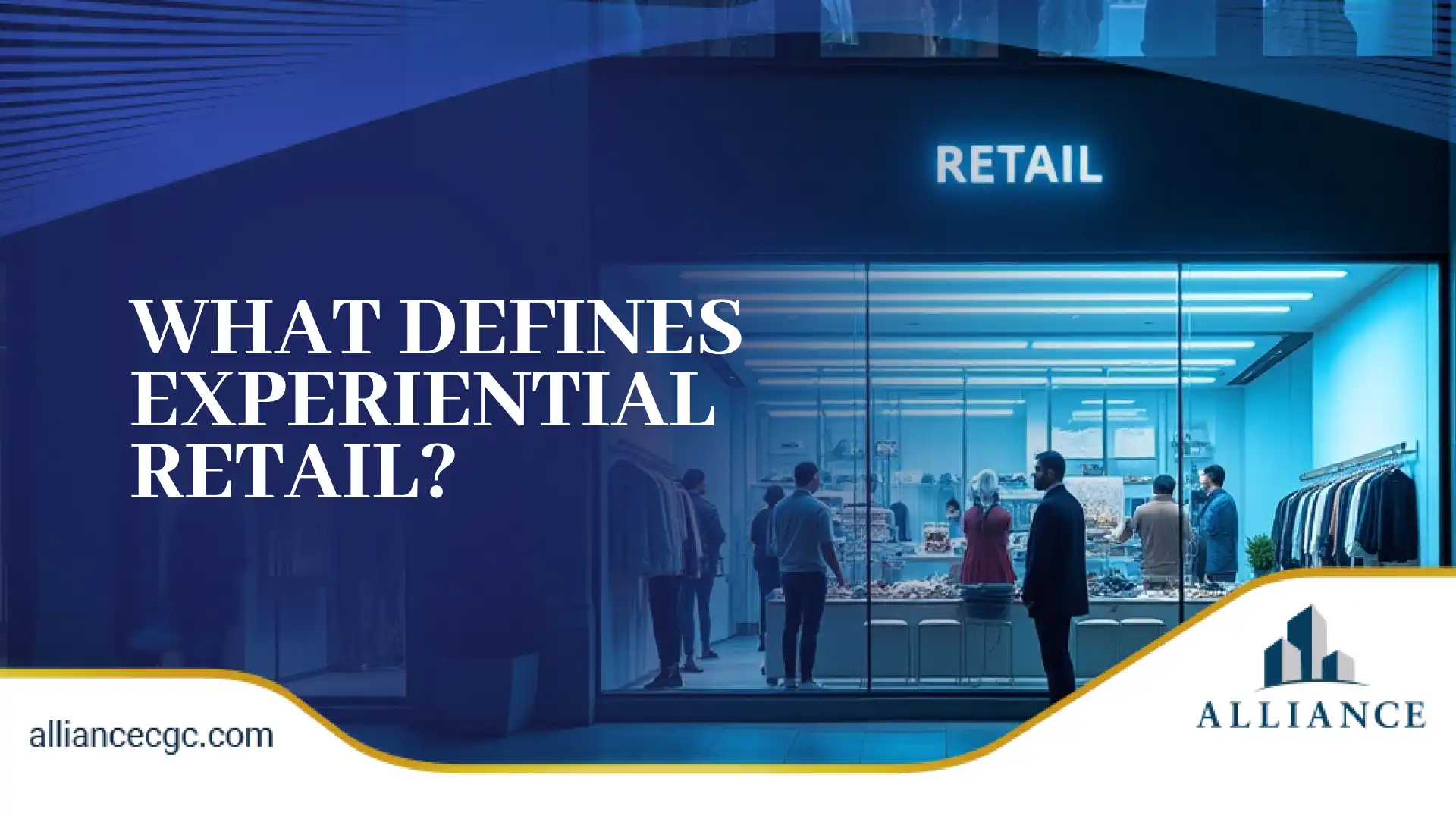
Experiential retail delivers controlled upside in 2025 by capturing demand built on deliberate, in-person engagement behavior that online channels can’t replicate. These properties thrive because consumers dedicate time to fitness, dining, entertainment and activity-driven experiences, creating traffic patterns that consistently enhance the value of the entire center.
The category isn’t expanding by accident. The experiential retail market reached USD 84.94 billion in 2023 and is projected to grow at nearly 14% CAGR through 2032. Growth at that scale reflects where operators are deploying capital confidently and where demand has remained structurally durable.
When you anchor part of your retail strategy in experience-driven tenants, you’re not relying on incidental visits; you’re leveraging behavior that strengthens co-tenancy, improves dwell time and elevates rent performance. For investors seeking stability with meaningful upside, experiential retail offers a performance profile that aligns with disciplined portfolio construction.
How Grocery-Anchored Retail Performs in 2026?
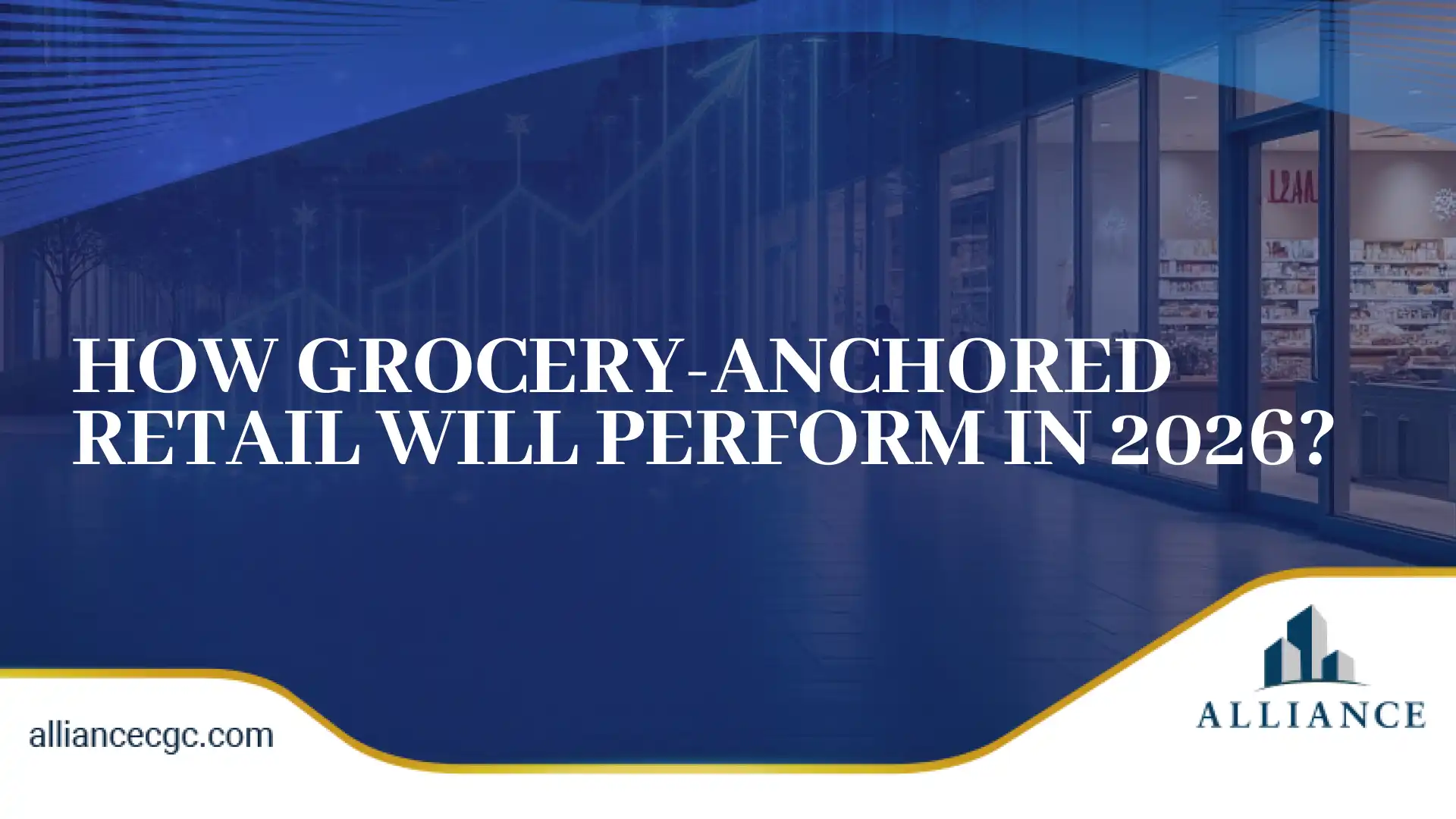
Grocery-anchored retail continues to deliver one of the most reliable performance profiles in 2026, driven by essential-use demand and tenant behavior that remains consistent across economic cycles. These centers perform predictably, and that predictability is exactly what disciplined operators lean on when building a stable income base inside a diversified retail strategy:
- Essential weekly demand keeps traffic steady and repeatable, strengthening performance for both anchors and inline tenants.
- Creditworthy grocery operators enhance income stability and foster long-term leasing confidence.
- Vacancy levels remain among the lowest in retail, giving these assets a renewal advantage that translates into dependable net operating income (NOI).
- Risk-adjusted returns remain strong, providing the structural stability needed to anchor a portfolio through shifting consumer conditions.
Grocery-anchored retail doesn’t rely on trend-driven spending or discretionary engagement; it performs because the underlying demand is non-negotiable. In a year when investors need assets that behave consistently and support broader portfolio resilience, grocery-anchored centers offer the kind of stability that strengthens performance at the foundation, while leaving room for experiential retail to deliver measured upside.
Build Strength. Capture Upside. Perform Through Every Cycle.
Lasting retail performance isn’t created by choosing one asset type over another; it’s made by understanding how essential and experiential demand work together to reinforce cash flow, elevate engagement and strengthen returns across cycles. Grocery-anchored retail delivers the stability every portfolio needs. Experiential retail offers the measured upside that drives continued performance growth. When structured with intention, the two create a balanced engine built to perform in any market.
Alliance has built its strategy on that philosophy. For more than 30 years, the firm has applied disciplined evaluation, operational rigor and a commitment to fundamentals to develop a $500M+ portfolio that has delivered a 28% historical IRR and an average 2.5x equity multiple. Those results aren’t the product of timing; they’re the outcome of systems, precision and experience that hold up through every cycle.
Invest with Alliance and put a proven, cycle-tested retail strategy to work, one engineered to convert stability and upside into measurable, compounding performance.
Frequently Asked Questions (FAQs)
Is experiential retail a good investment?
Yes. Experiential retail offers substantial upside potential due to rising consumer demand for engagement-driven experiences. When supported by strong demographics and disciplined operational oversight, experiential retail can outperform traditional formats in terms of rent growth and foot traffic capture.
Are grocery-anchored centers recession-proof?
Grocery-anchored centers are among the most resilient CRE assets. Their essential nature, high-frequency visits and anchor-driven stability contribute to strong occupancy and predictable income through economic cycles.
What retail assets perform best in 2025?
Grocery-anchored retail leads in stability, while experiential retail leads in upside potential. Markets with strong population growth, particularly in the Sun Belt, are well-positioned for the strongest performance across both categories.
How do I invest in retail commercial real estate (CRE)?
Investors should evaluate tenant credit, market demographics, lease structures and operational efficiency to make informed decisions. Partnering with experienced CRE operators, such as Alliance, ensures that assets are managed with discipline, a data-backed strategy and long-term value creation in mind.


